





 Analysis by Gamescozy
I find Magic Tiles 3™ easiest to understand as a quick rhythm challenge rather than a piano lesson. You tap the dark tiles as they arrive, trying to keep pace with the music and avoid a missed note. That simple premise gives each round an immediate purpose: watch, listen, react. It is a natural fit for a short break, though the same quick restart can tempt me into playing longer than I planned.
From a quick first impression to a focused session
The presentation is built around getting me into the action without a long introduction. I choose a song, follow the moving tiles, and learn the feel of a track by playing it. The game’s identity is clear from the start: this is a music game about timing and concentration, not a simulation of sitting at a real piano. If you want to practice scales or learn notation, I would point you elsewhere.
That distinction matters because the piano imagery can suggest a more educational experience than the play actually offers. The useful skill here is rhythmic response: noticing what is coming, keeping a steady finger, and recovering attention after a mistake. I enjoy it most when I treat the score as feedback on my timing rather than as a measure of musical ability.
There is a satisfying rhythm to a session. A song starts, the tiles set the pace, and the screen gives me little room to drift. When I miss, I can recognize the practical lesson: I looked away, anticipated too soon, or let the tempo pull me off balance. That makes the game easy to pick up even when I have only a few minutes, while still giving me a reason to try a track again.
It is also a game that rewards the right kind of attention. I would not play it while walking near traffic, crossing a street, or trying to follow a conversation. The visual stream demands focus, and tapping accurately on a small screen is a poor match for a distracted setting. On a quiet bus ride or during a break at home, however, a short attempt can feel like a compact mental reset.
A visual style that keeps the notes in charge
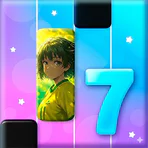
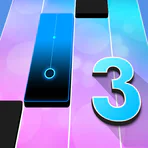
The central visual language is functional: the tiles are the thing I need to read, and the background and piano framing support that task. Rather than asking me to explore a detailed world, the game places me in a music-first space where the moving pattern is the main event. I appreciate that clarity during faster passages, when decorative clutter would make it harder to track the next tap.
This simplicity also shapes the mood. There is a light, arcade-like energy to the experience, but it does not depend on a story or a character journey. The song supplies the emotional color, while the tiles turn listening into a physical response. For me, the most enjoyable moments come when the visual sequence and the beat feel aligned, so I stop thinking about individual taps and settle into the pattern.
One practical tip is to keep the device comfortably steady and use the same fingers consistently. It sounds basic, but changing hand position halfway through a song can make a familiar pattern feel unexpectedly awkward. I also find it helpful to look slightly ahead of the tile I am about to tap instead of staring only at the bottom of the screen. That small shift gives me more time to prepare, especially when the rhythm tightens.
The art direction does not turn the game into a deep fantasy setting, and that is a deliberate strength as much as a limitation. Players looking for expressive environments, narrative scenes, or elaborate visual progression may find the presentation spare. Players who want a clear lane for reading notes and responding quickly are more likely to see that restraint as useful.
How the music shapes the pace
Because the action follows music, sound is not background decoration; it is part of how I judge timing. I get more out of a round when I can hear the beat clearly and let it guide my taps, rather than relying only on visual reaction. Playing with the sound on makes the experience feel more coherent, while silent play can make it seem like a simple stream of moving targets.
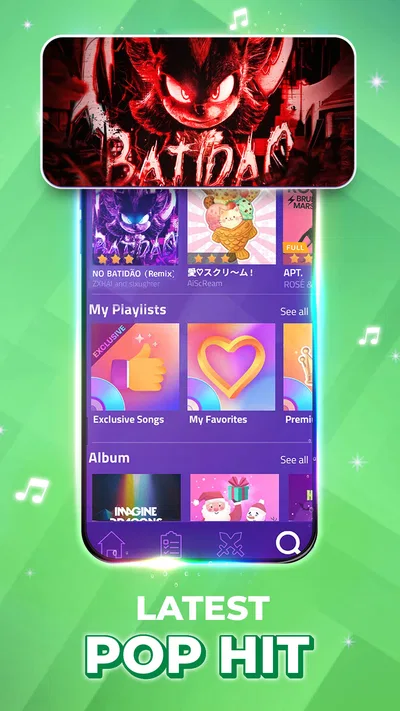
The game’s musical identity spans familiar pop-oriented appeal and piano-style rhythm challenges, with K-pop and seasonal songs reflected in its store description. The range makes the basic mechanic feel less monotonous than repeating one tune, but song choice still changes how approachable a session feels. A track whose beat I can quickly recognize is easier to settle into; an unfamiliar or busy-feeling rhythm can demand more concentration than I want from a casual break.
For a better first session, I would start with a song whose pace feels comfortable rather than choosing the hardest challenge just to test myself. Once I have a sense of how the tiles line up with the beat, I can move on to a more demanding attempt. That approach helps separate two kinds of difficulty: learning the game’s timing and handling a genuinely quicker sequence.
There is a trade-off in the tight link between sound and play. The soundtrack gives taps a reason and a pulse, but the game is less appealing if I want to listen passively or keep my attention elsewhere. It is also not a substitute for a music player: the music is there to frame a challenge, not simply to provide uninterrupted listening. If I want a hands-free soundtrack, I choose another option; if I want to interact with a song, this format makes sense.
When the tapping mechanics fit—and when they do not
The controls are immediately readable, which is why I can recommend the game to someone who does not usually play mobile games. There is no complicated control scheme to memorize before a round. The challenge comes from timing, maintaining focus, and making quick corrections. That accessibility is appealing, though it also means the core action stays narrow: players who need movement, exploration, or strategic choices may tire of tapping tiles.
I see it as a stronger fit for short, repeatable attempts than for a long, uninterrupted evening. A few rounds can turn waiting time into a focused activity, and restarting after a stumble makes it easy to chase a cleaner performance. The flip side is that repeated attempts can feel similar if I am not interested in improving my timing or trying different music. I would skip it if I wanted a game with a substantial campaign or changing objectives.
Compared with music games built around instrument practice, this one puts reaction and rhythm ahead of technique. Compared with casual tapping games that use music mainly as decoration, the beat is more central to how I experience a round. That middle ground is its appeal: it is easier to approach than a serious rhythm-training tool, but it still asks me to listen rather than tap randomly.
For everyday use, I can imagine opening it during a short wait, playing a song, then putting the phone away. I would avoid starting a challenging track when I have only a few seconds before an appointment, because the focus required makes it harder to stop mid-flow. A better routine is to choose one track before a break begins and treat a completed attempt as the natural stopping point.
It is free to download, with in-app purchases ranging from $0.99 to $49.99 per item. I would approach optional spending as a personal choice rather than something needed to enjoy the basic idea. If you are cautious about purchases, check the app store settings on your device before handing the phone to a child or letting someone else play. The game is rated Everyone 10+, so I would also consider whether its rhythm challenges and purchase options suit the player in your household.
Who will enjoy it, and what to expect before installing
AMANOTES PTE. LTD. makes a game with broad reach: it has more than 500 million installs, an average rating of 4.6 from around 3.6 million ratings, and roughly 111,000 written reviews. Those figures suggest many players have found the format approachable, but they do not mean the repeated tapping will suit everyone. I would recommend it to someone who likes music-led challenges, quick retries, and a clear test of attention.
The current version is 13.084.006, and the game requires Android 7.0 or later. It was released on February 24, 2017, which gives it a long-running presence in mobile rhythm games. That history may reassure someone looking for an established title, but it does not change the central decision: do you enjoy following a beat with fast, precise taps?
I would be less enthusiastic about it for someone who wants to learn piano in a structured way, needs a quiet game that can be played without sound, or dislikes repeating a song to improve a result. Likewise, a player sensitive to fast-moving visuals may find the incoming tiles tiring during longer sessions. In those cases, a slower rhythm game, a music-learning app, or a game with broader controls would be a better match.
For most curious players, the best test is simple: try a comfortable song, keep your device steady, and pay attention to whether the beat makes the taps feel satisfying or stressful. If the pattern pulls you in, the game offers an easy way to turn a spare moment into a focused musical challenge. If you find yourself watching the screen without enjoying the sound or timing, there is little reason to force it.
A clear mood, with a deliberately narrow focus
What stays with me is the way the art, sound, and pacing support one central activity. The screen directs my eyes to the tiles, the music gives them a pulse, and the short-song structure makes it easy to try again. That coherence is more persuasive than a promise of musical mastery: I am there to react, listen, and see whether I can keep the rhythm together.
My recommendation is for players who want a direct, music-centered reflex game in brief sessions. Magic Tiles 3™ is less convincing as a piano tutor or a deep, varied game, and its repeated tapping will not suit every mood. But when I want an uncomplicated challenge that makes me pay attention to a song, its focused design gives it a distinct and enjoyable place on my phone.